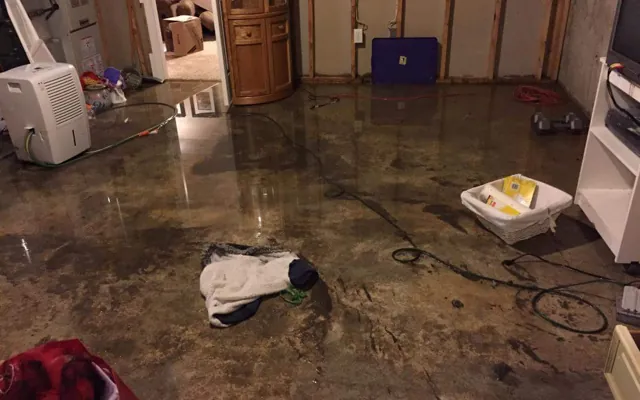
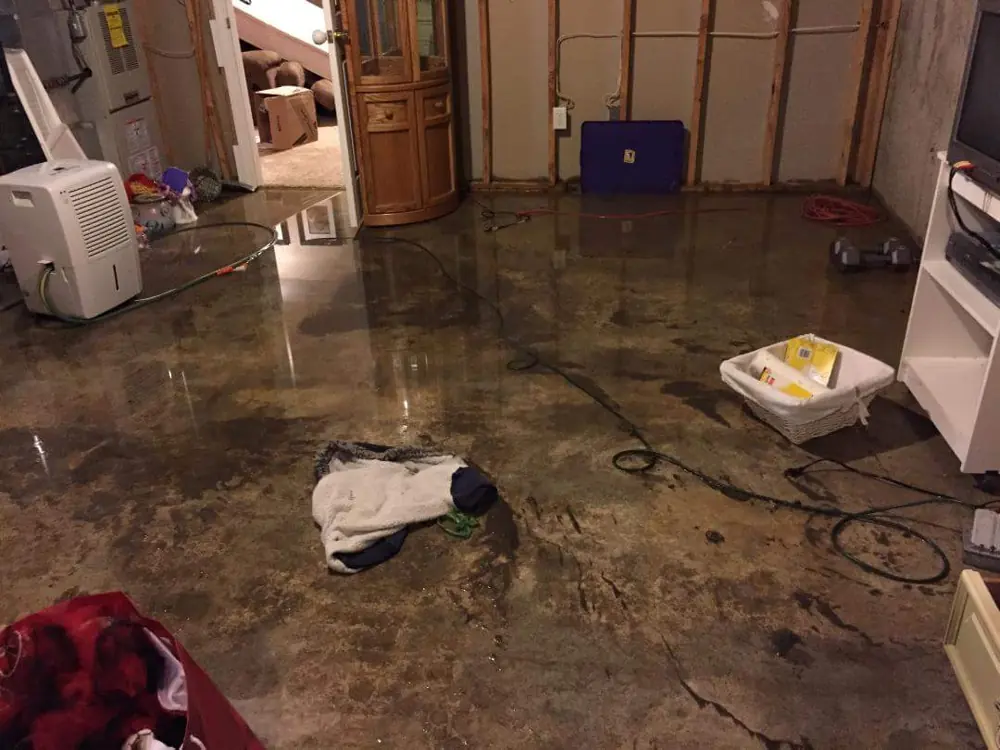
A failed water heater tank can empty 40 to 50 gallons across a garage or utility closet floor in minutes, and that water often finds its way into an attached living space before anyone notices. Crews respond 24/7 to extract the water and dry the area.

A crew arrives in about an hour and confirms the water supply to the tank is shut off, checking for gas or electrical hazards near standing water before work begins.
Standing water is extracted from the garage, closet, or utility room floor and any adjoining space it reached.
Baseboards and the base of adjoining walls are checked and opened where needed to confirm no water traveled into a neighboring room's framing.
Air movers and dehumidifiers dry the affected area to a verified moisture target, with photos and readings documented for the insurance claim.

While help is on the way, these first steps, done only where it is safe, limit the damage and protect the insurance claim.
Shut the supply off at the source, or close the home's main valve if the source is not obvious. Stopping the flow limits the damage more than anything else.
Switch off electricity to the affected area, but only if the breaker can be reached without standing in or touching the water.
Get a crew dispatched right away. The sooner extraction and drying begin, the more flooring, drywall, and belongings can be saved.
Take photos and a short video of the water and the affected rooms before anything is moved, so the insurance claim starts strong.
Water heater leak cleanup in Burbank typically runs from about $400 to $1,800, depending on whether the water stayed contained to a garage or utility closet or traveled into an adjoining room. A contained garage leak sits on the low end, while a leak that reached a laundry room or bedroom closet with baseboard and drywall damage sits on the high end. Cleanup and drying from a sudden tank failure are commonly covered under a homeowner policy, with the tank replacement itself typically a separate line item handled by a qualified plumber.
Crews reach Burbank, Glendale, and the San Fernando Valley fast, from the Rancho District, Burbank Hills, and Magnolia Park to North Hollywood, Studio City, and Pasadena. See the full list on the areas served across Burbank page.
See all areas servedEvery loss is photographed, measured, and logged from the first visit, so the paperwork holds up with the insurance carrier.
Technicians follow recognized IICRC drying standards and prove it with daily moisture readings on Burbank homes, not guesswork.
Emergency dispatch any hour of the day or night, with a real crew on the way across the San Fernando Valley, not a callback in the morning.
A real crew dispatched any hour, not a callback in the morning.
Trained technicians following recognized IICRC drying standards.
Truck-mounted, portable, and submersible for any size loss.
The loss is documented and billed to the carrier directly.
Tank-style water heaters commonly reach 8 to 12 years before internal corrosion becomes a risk, and a sudden failure at the tank seam or drain valve can happen with little warning near the end of that range.
Because garages and utility closets sit at or near the main floor level rather than below grade, water from a failed tank spreads sideways under walls into adjoining rooms instead of staying contained.
Sudden tank failures are commonly covered under a homeowner policy for the resulting water damage cleanup, while gradual leaks that went unnoticed for a long time may be reviewed differently by the carrier.
A drain pan with a drain line can route a future leak away from living space, and a qualified plumber can advise whether it makes sense for a specific installation.
Often, yes, if the water is caught and extracted quickly. Drywall that stayed wet for an extended period is more likely to need a section removed.
Burbank crews are on call 24 hours a day, local and fast, and can be on the way within the hour.
Call (747) 977-8570