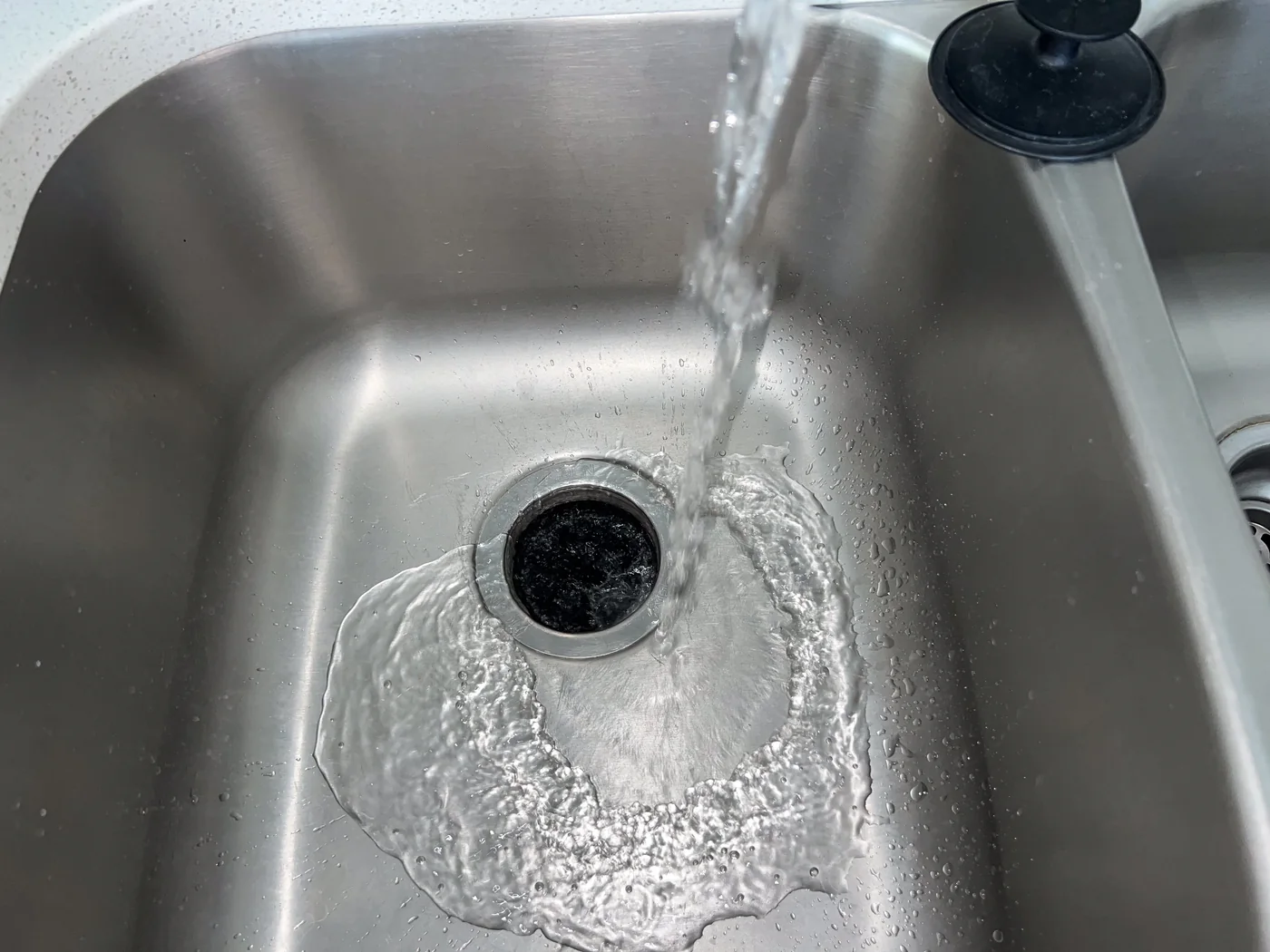
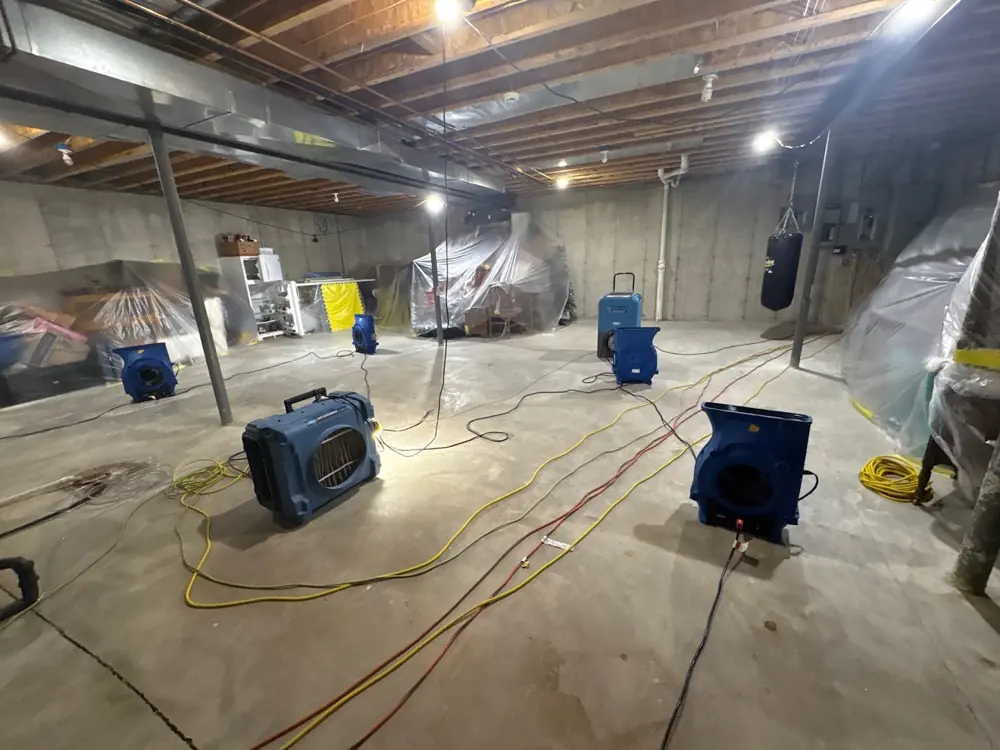
A worn washer, a loose supply line fitting, or corrosion at a shutoff valve can drip for months before anyone notices, quietly swelling the cabinet floor underneath or staining flooring nearby. Crews trace the leak to its source and dry whatever it has reached, whether that took a week or a year to happen.

Every connection point, the supply line, shutoff valve, and fixture base, is checked to find exactly where the water is coming from.
A moisture meter checks the cabinet, flooring, and any adjoining materials to determine how far the slow leak actually traveled over time.
Swollen or saturated cabinet panels, baseboards, or flooring sections are removed where drying in place is not enough.
The area is dried to a verified moisture level, and a qualified plumber is recommended to replace the worn part causing the leak.

While help is on the way, these first steps, done only where it is safe, limit the damage and protect the insurance claim.
Shut the supply off at the source, or close the home's main valve if the source is not obvious. Stopping the flow limits the damage more than anything else.
Switch off electricity to the affected area, but only if the breaker can be reached without standing in or touching the water.
Get a crew dispatched right away. The sooner extraction and drying begin, the more flooring, drywall, and belongings can be saved.
Take photos and a short video of the water and the affected rooms before anything is moved, so the insurance claim starts strong.
A fixture leak caught within days, limited to a cabinet floor or small area, typically runs from about $200 to $600 for extraction and drying, not including the plumber's charge to replace the worn part. A leak that ran undetected for months and reached flooring or multiple cabinet panels runs closer to $1,000 to $3,000 once affected materials are removed and replaced. Insurance coverage for slow leaks varies more than sudden ones, since some policies distinguish between a sudden failure and long-term seepage, so documentation of when the leak was found matters for the claim.
Crews reach Burbank, Glendale, and the San Fernando Valley fast, from the Rancho District, Burbank Hills, and Magnolia Park to North Hollywood, Studio City, and Pasadena. See the full list on the areas served across Burbank page.
See all areas servedEvery loss is photographed, measured, and logged from the first visit, so the paperwork holds up with the insurance carrier.
Technicians follow recognized IICRC drying standards and prove it with daily moisture readings on Burbank homes, not guesswork.
Emergency dispatch any hour of the day or night, with a real crew on the way across the San Fernando Valley, not a callback in the morning.
A real crew dispatched any hour, not a callback in the morning.
Trained technicians following recognized IICRC drying standards.
Truck-mounted, portable, and submersible for any size loss.
The loss is documented and billed to the carrier directly.
They are typically slow drips hidden inside a cabinet or behind a fixture base, producing little visible water at any one time even though the total volume adds up significantly over weeks or months.
A soft or swollen cabinet floor, darkened grout lines, a faint musty smell, or flooring that has started to cup near a bathroom or kitchen fixture are the most common signs.
Not always. Some policies treat gradual, long-term leaks differently than sudden failures, which is why documenting how long the leak likely ran matters for the claim.
It depends on how long the material sat wet. Caught within a couple of weeks, a cabinet floor can sometimes be dried in place; longer exposure usually means the panel needs replacement.
A qualified plumber replaces the worn valve, washer, or supply line fitting. Restoration work addresses the resulting cabinet, flooring, or subfloor damage separately.
Burbank crews are on call 24 hours a day, local and fast, and can be on the way within the hour.
Call (747) 977-8570