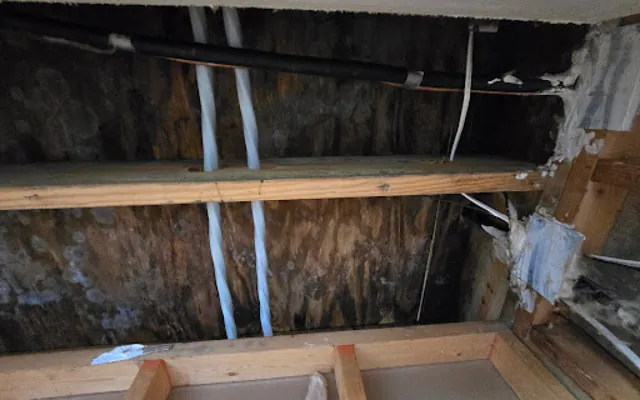
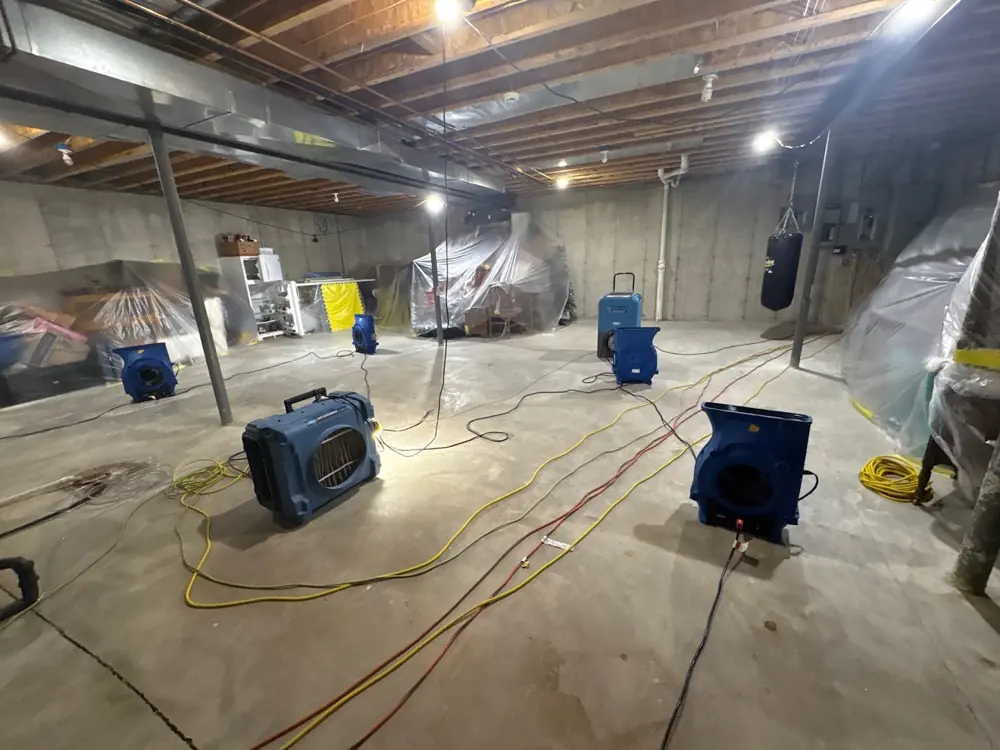
With the air handler mounted in the attic in many Burbank homes and roof sealant tested hardest during winter atmospheric-river storms, attics take on water from more than one direction. Crews check insulation, framing, and ceiling drywall together, since attic moisture rarely stays contained to just one spot.

The attic is checked for the actual entry point, whether roof intrusion, a condensate overflow, or another source, before any repair work begins.
Saturated insulation is removed since wet insulation loses its effectiveness and holds moisture against framing and drywall.
Rafters, top plates, and the ceiling drywall below are checked with a moisture meter to confirm how far the water traveled.
Air movers and dehumidifiers dry the attic and ceiling cavity, and a qualified roofer or HVAC technician is recommended to fix the actual source.

While help is on the way, these first steps, done only where it is safe, limit the damage and protect the insurance claim.
Shut the supply off at the source, or close the home's main valve if the source is not obvious. Stopping the flow limits the damage more than anything else.
Switch off electricity to the affected area, but only if the breaker can be reached without standing in or touching the water.
Get a crew dispatched right away. The sooner extraction and drying begin, the more flooring, drywall, and belongings can be saved.
Take photos and a short video of the water and the affected rooms before anything is moved, so the insurance claim starts strong.
Attic water damage caught with a contained wet spot in insulation and no ceiling sagging typically runs from about $600 to $1,800 for insulation removal, drying, and minor ceiling repair. Damage that reached framing across a larger section, or caused a ceiling to sag or need drywall replacement in more than one room, runs closer to $2,500 to $7,000. New insulation is typically a separate line item once drying is verified. Sudden water intrusion is commonly covered by homeowners insurance, with moisture documentation supporting the claim.
Crews reach Burbank, Glendale, and the San Fernando Valley fast, from the Rancho District, Burbank Hills, and Magnolia Park to North Hollywood, Studio City, and Pasadena. See the full list on the areas served across Burbank page.
See all areas servedEvery loss is photographed, measured, and logged from the first visit, so the paperwork holds up with the insurance carrier.
Technicians follow recognized IICRC drying standards and prove it with daily moisture readings on Burbank homes, not guesswork.
Emergency dispatch any hour of the day or night, with a real crew on the way across the San Fernando Valley, not a callback in the morning.
A real crew dispatched any hour, not a callback in the morning.
Trained technicians following recognized IICRC drying standards.
Truck-mounted, portable, and submersible for any size loss.
The loss is documented and billed to the carrier directly.
A ceiling stain, a musty smell in an upstairs room, or a noticeable rise in humidity are common signs. Attic water damage is frequently found before it is felt, during an inspection prompted by a smaller visible sign.
Fiberglass and cellulose insulation generally lose their insulating value once saturated and are typically removed and replaced rather than dried and reused.
Yes. Water follows rafters, top plates, and ductwork, so a ceiling stain in one room does not always mean the actual entry point is directly above it.
Sudden water intrusion from a storm or appliance failure is commonly covered. Long-term, previously known leaks may be reviewed differently, so documenting when the damage was discovered matters.
Roof sealant or flashing failure during winter storms and condensate overflow from an attic-mounted HVAC system during hot months account for most attic water damage seen locally.
Burbank crews are on call 24 hours a day, local and fast, and can be on the way within the hour.
Call (747) 977-8570