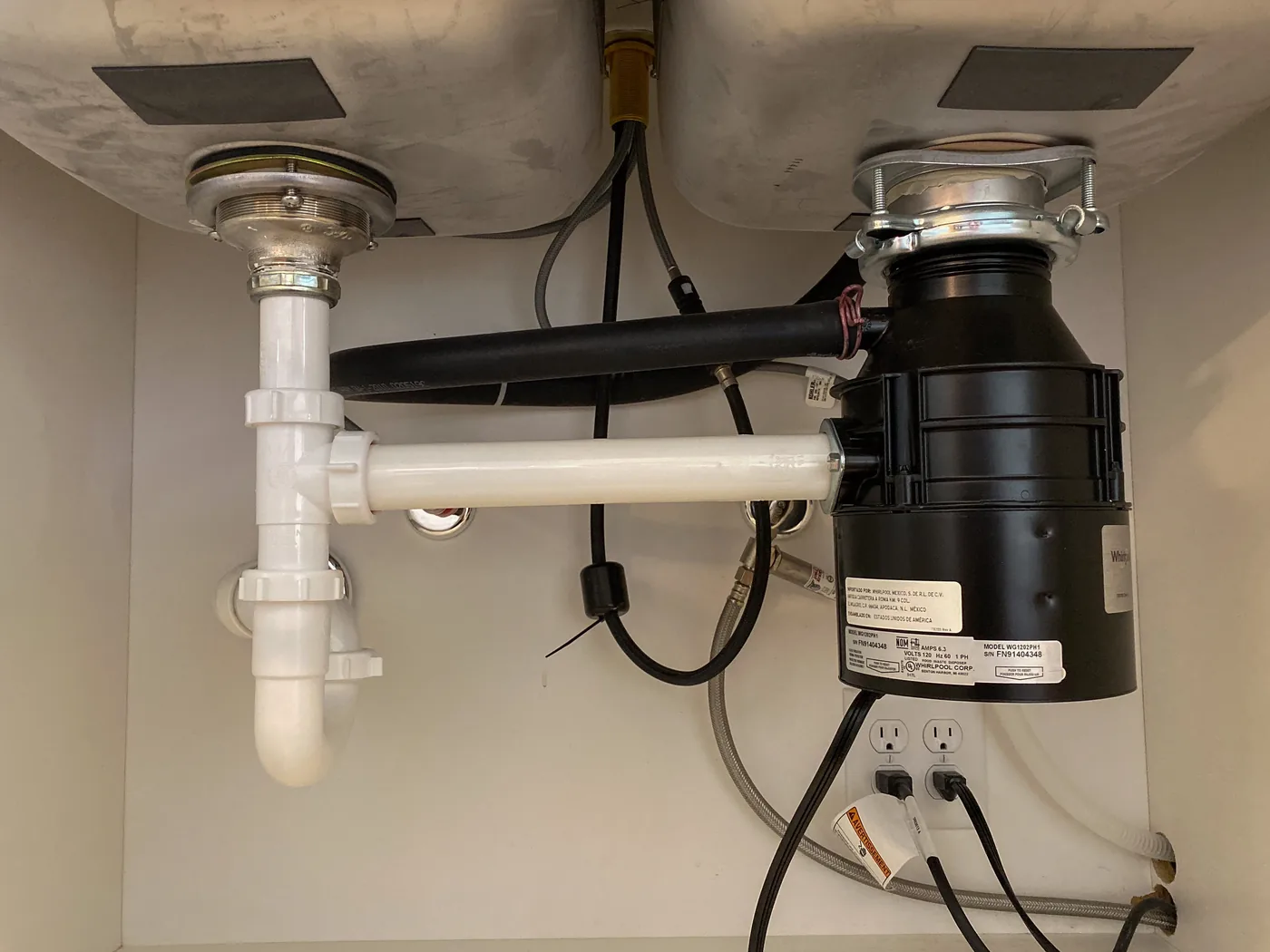
A garbage disposal's seals wear out gradually, and a crack in the housing or a loose mounting ring can drip with every use of the sink, hidden behind the cabinet door where nobody looks until the shelf feels soft. Crews check under the sink to find the source and dry the cabinet before it spreads further.

The disposal is run under observation to pinpoint whether the leak is from the housing, the mounting ring, or a drain connection.
The cabinet floor and any shelving under the sink are inspected and moisture-tested to see how far the leak has traveled.
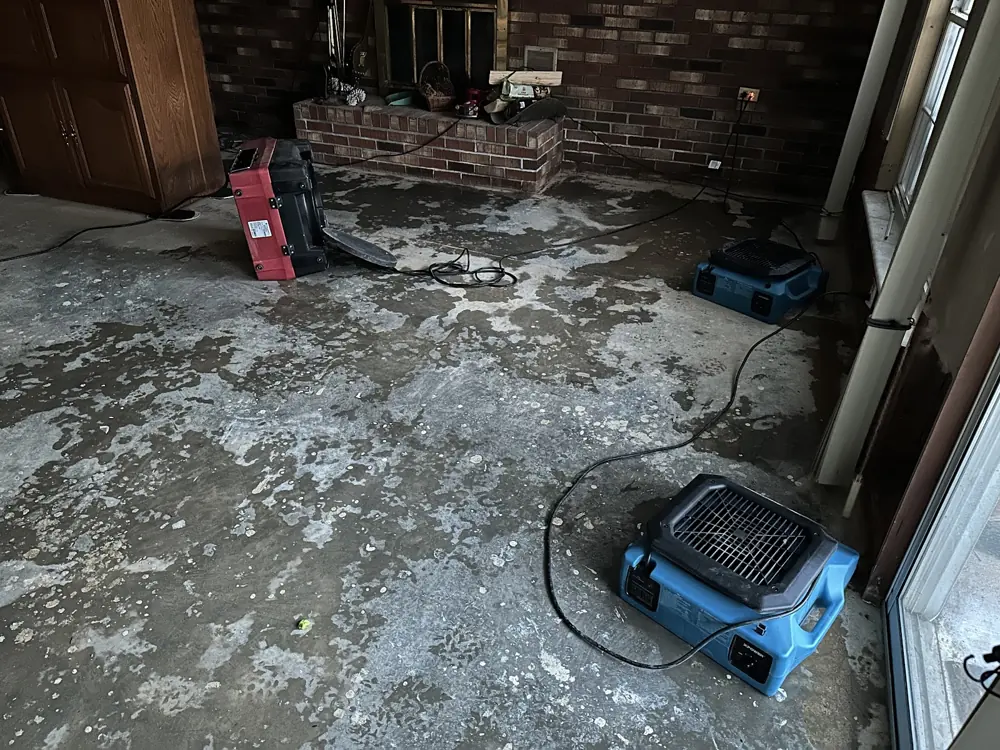
Any pooled water is extracted, and swollen or saturated cabinet material is opened or removed to allow direct drying.
Air movers dry the cabinet cavity, and a qualified plumber is recommended to replace the disposal unit or reseal the connection.

While help is on the way, these first steps, done only where it is safe, limit the damage and protect the insurance claim.
Shut the supply off at the source, or close the home's main valve if the source is not obvious. Stopping the flow limits the damage more than anything else.
Switch off electricity to the affected area, but only if the breaker can be reached without standing in or touching the water.
Get a crew dispatched right away. The sooner extraction and drying begin, the more flooring, drywall, and belongings can be saved.
Take photos and a short video of the water and the affected rooms before anything is moved, so the insurance claim starts strong.
A garbage disposal leak caught within a few days, limited to the cabinet floor directly under the sink, typically runs from about $200 to $600 for extraction and drying, not including the plumber's charge to replace or reseal the unit. A leak that went unnoticed longer and reached adjoining cabinetry or flooring runs closer to $800 to $2,000 once additional panels or a section of flooring have to be addressed. Sudden appliance failures are commonly covered by homeowners insurance, with moisture readings documented for the claim.
Crews reach Burbank, Glendale, and the San Fernando Valley fast, from the Rancho District, Burbank Hills, and Magnolia Park to North Hollywood, Studio City, and Pasadena. See the full list on the areas served across Burbank page.
See all areas servedEvery loss is photographed, measured, and logged from the first visit, so the paperwork holds up with the insurance carrier.
Technicians follow recognized IICRC drying standards and prove it with daily moisture readings on Burbank homes, not guesswork.
Emergency dispatch any hour of the day or night, with a real crew on the way across the San Fernando Valley, not a callback in the morning.
A real crew dispatched any hour, not a callback in the morning.
Trained technicians following recognized IICRC drying standards.
Truck-mounted, portable, and submersible for any size loss.
The loss is documented and billed to the carrier directly.
A soft or swollen cabinet floor under the sink, a musty smell, or water pooling only when the disposal runs are the most common signs of a slow leak.
Sometimes a loose mounting ring or a drain connection can be resealed, but a cracked housing usually means the unit itself needs to be replaced by a qualified plumber.
Only if the panel has already swollen or delaminated. A cabinet floor caught wet early can often be dried in place without replacement.
A sudden failure is commonly covered. Damage from a leak that was visible and left unaddressed for an extended period may be reviewed differently by the carrier.
It varies with use and water quality, but seals and gaskets commonly degrade over several years, which is why an older unit is more likely to develop a leak than a new one.
Burbank crews are on call 24 hours a day, local and fast, and can be on the way within the hour.
Call (747) 977-8570