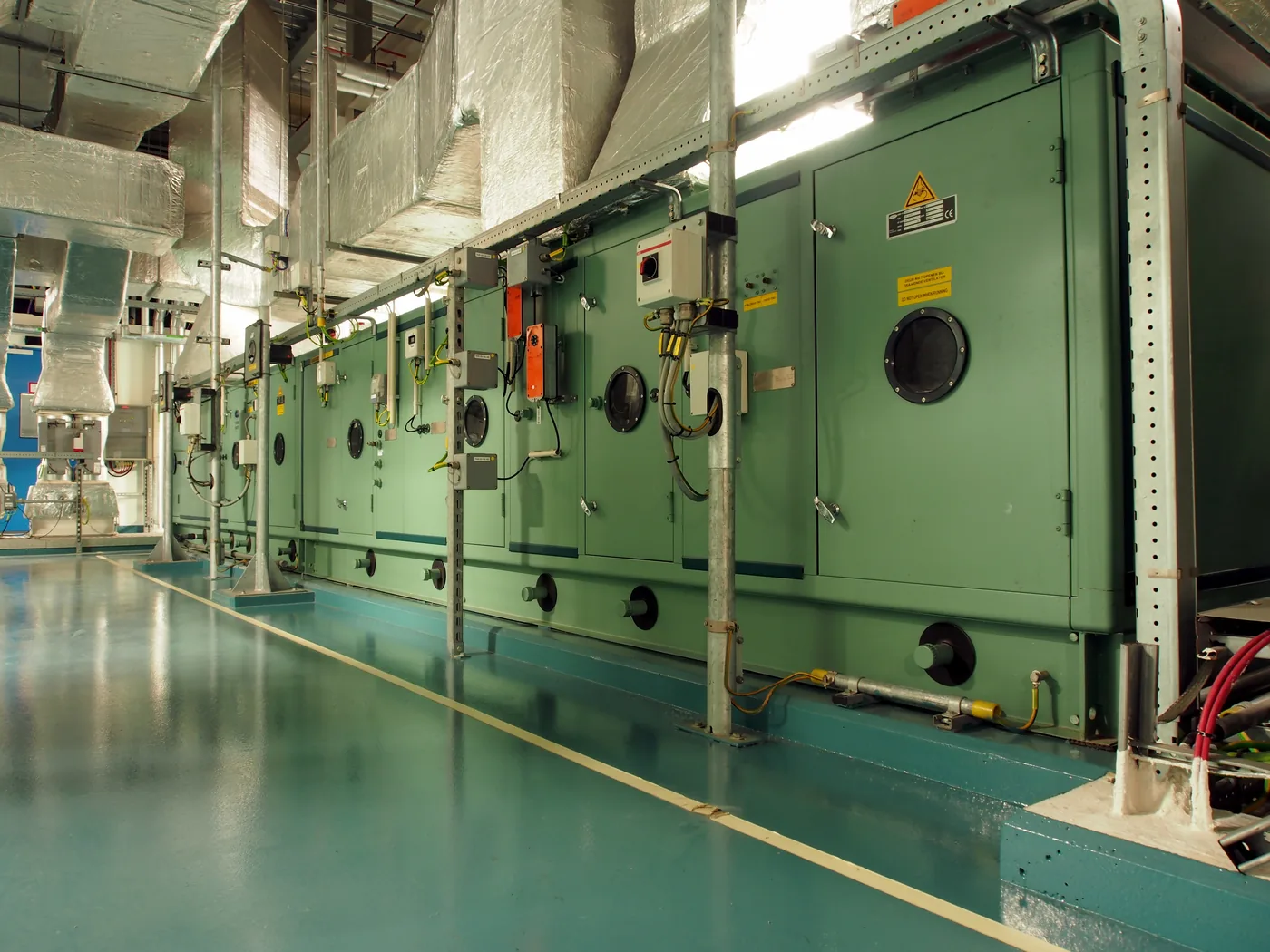
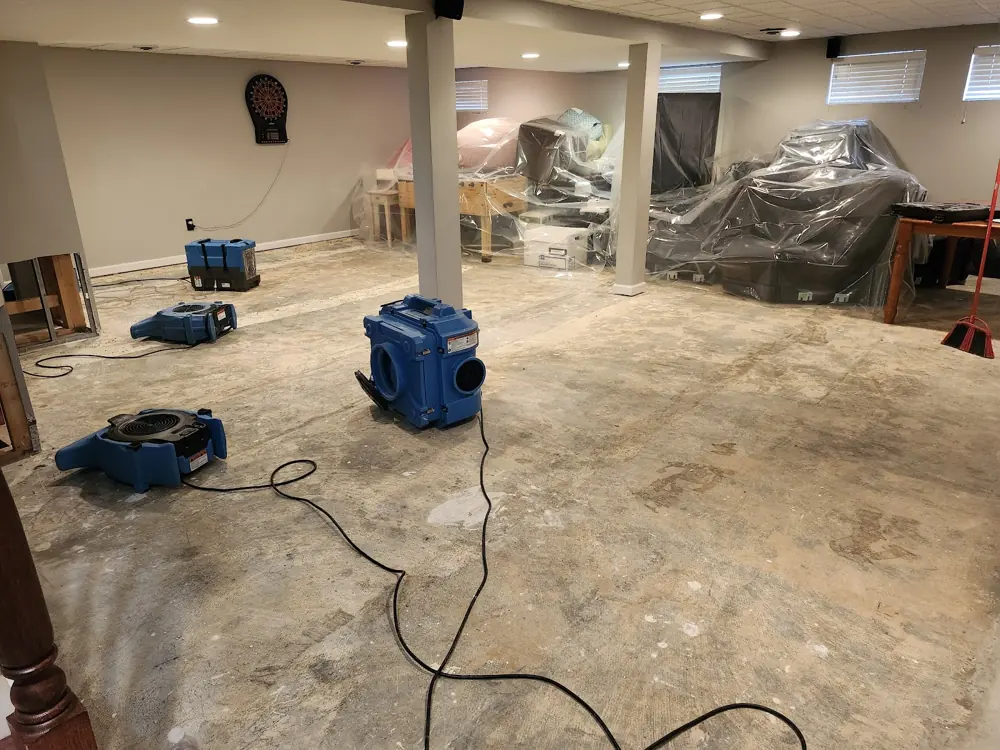
A clogged condensate drain line on a hard-running air conditioner can back up and overflow straight into a ceiling below an attic air handler, often during the hottest stretch of a Burbank summer when the system runs longest. Crews respond to catch the overflow, dry the ceiling, and check for hidden moisture.

The stain or drip is traced back to the attic air handler and condensate line rather than assumed to be a roof leak, since the two can look identical from below.
The HVAC unit is shut off if condensate is still actively overflowing, so drying is not undone by continued dripping while work is underway.
The affected ceiling material and any wet attic insulation are checked and opened where needed to dry the cavity and prevent staining or sagging from worsening.
Air movers and a dehumidifier dry the ceiling cavity, and an HVAC technician is recommended to clear the condensate line and check the safety switch.

While help is on the way, these first steps, done only where it is safe, limit the damage and protect the insurance claim.
Shut the supply off at the source, or close the home's main valve if the source is not obvious. Stopping the flow limits the damage more than anything else.
Switch off electricity to the affected area, but only if the breaker can be reached without standing in or touching the water.
Get a crew dispatched right away. The sooner extraction and drying begin, the more flooring, drywall, and belongings can be saved.
Take photos and a short video of the water and the affected rooms before anything is moved, so the insurance claim starts strong.
A condensation leak caught early, with a small ceiling stain and no sagging, typically runs from about $300 to $900 for drying and minor ceiling patching, not including the HVAC technician's charge to clear the line. A leak that ran longer and soaked ceiling drywall or insulation across a larger area runs closer to $1,200 to $3,500 once drywall removal and repainting are included. Sudden HVAC-related water damage is commonly covered by homeowners insurance, with moisture readings documented for the claim.
Crews reach Burbank, Glendale, and the San Fernando Valley fast, from the Rancho District, Burbank Hills, and Magnolia Park to North Hollywood, Studio City, and Pasadena. See the full list on the areas served across Burbank page.
See all areas servedEvery loss is photographed, measured, and logged from the first visit, so the paperwork holds up with the insurance carrier.
Technicians follow recognized IICRC drying standards and prove it with daily moisture readings on Burbank homes, not guesswork.
Emergency dispatch any hour of the day or night, with a real crew on the way across the San Fernando Valley, not a callback in the morning.
A real crew dispatched any hour, not a callback in the morning.
Trained technicians following recognized IICRC drying standards.
Truck-mounted, portable, and submersible for any size loss.
The loss is documented and billed to the carrier directly.
A condensation leak traces back to the attic air handler and its drain line, usually appearing during hot, dry stretches when the AC runs hardest, rather than during or right after rain.
The condensate line clogs gradually with algae and debris as the system runs constantly through hot weather, and with little rain locally to flush anything, clogs build up unnoticed until the pan overflows.
Often, if the leak is caught with a small, contained stain. A ceiling that has sagged or stayed wet for an extended period usually needs the affected drywall section removed and replaced.
Sudden and accidental water damage from a condensate overflow is commonly covered, though ongoing or long-neglected leaks may be treated differently. Moisture documentation supports whichever applies.
An HVAC technician clears the line, replaces a cracked pan, or tests the safety switch. Restoration work addresses the ceiling and any water damage separately.
Burbank crews are on call 24 hours a day, local and fast, and can be on the way within the hour.
Call (747) 977-8570