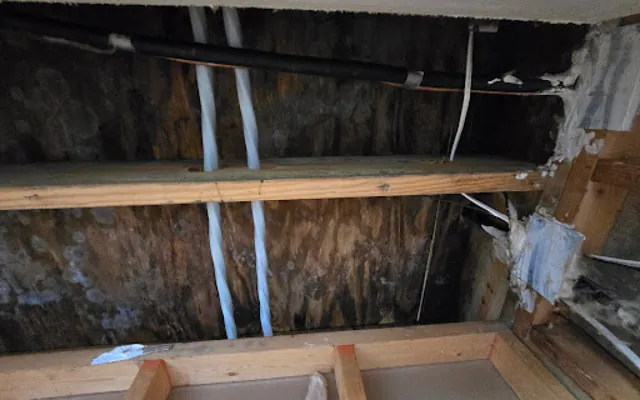
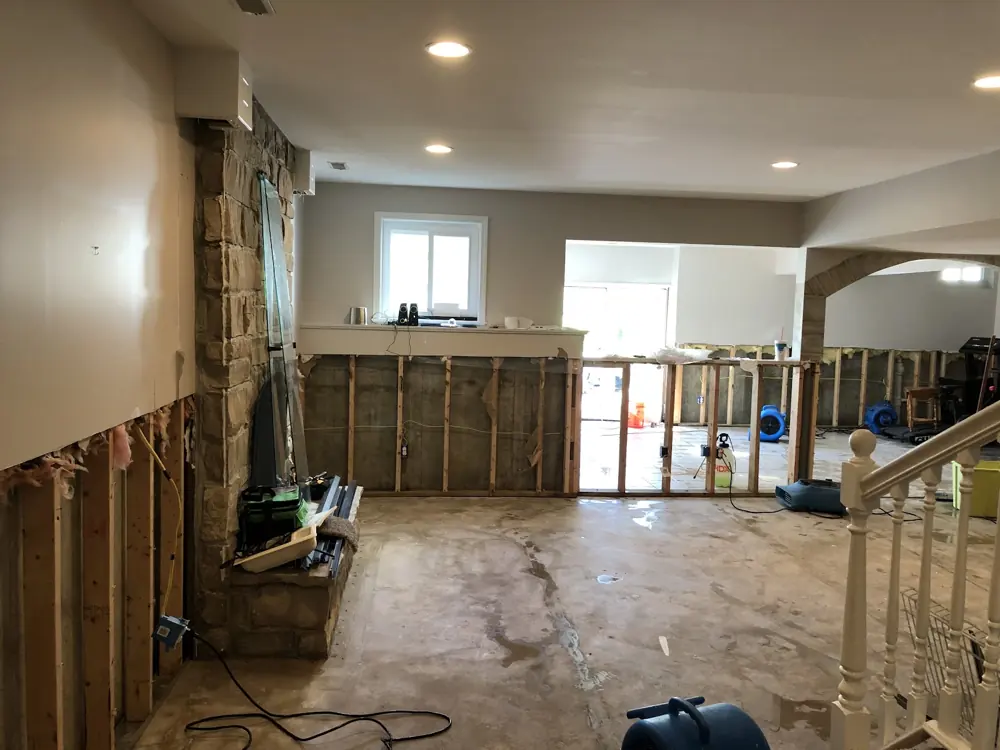
A true ice dam needs days of snow sitting on a roof with a freeze-thaw cycle underneath it, conditions the San Fernando Valley essentially never sees. What actually causes winter roof leaks around Burbank is aging sealant and flashing that finally gives out under heavy atmospheric-river rain, and crews respond to that far more common problem.

The timing and location of the stain are reviewed, since a leak that appears during or right after rain points to sealant or flashing failure, not ice.
If rain is still entering, the affected area is protected and the household is advised on next steps while a qualified roofer is arranged.
Moisture meters trace how far water traveled through the attic insulation and ceiling drywall from the entry point.
The affected ceiling and attic materials are dried and documented, and a qualified roofer is recommended to reseal or repair the actual entry point.

While help is on the way, these first steps, done only where it is safe, limit the damage and protect the insurance claim.
Shut the supply off at the source, or close the home's main valve if the source is not obvious. Stopping the flow limits the damage more than anything else.
Switch off electricity to the affected area, but only if the breaker can be reached without standing in or touching the water.
Get a crew dispatched right away. The sooner extraction and drying begin, the more flooring, drywall, and belongings can be saved.
Take photos and a short video of the water and the affected rooms before anything is moved, so the insurance claim starts strong.
Cleanup for a contained ceiling leak caught during a storm, before drywall sags or insulation is fully saturated, typically runs from about $350 to $1,000 for drying and minor repair, not including the roofer's charge to reseal or repair the leak point. A leak that ran through more than one storm before being noticed, soaking insulation and drywall across a larger area, runs closer to $1,500 to $4,000. Sudden storm-related water intrusion is commonly covered by homeowners insurance, with moisture readings documented for the claim.
Crews reach Burbank, Glendale, and the San Fernando Valley fast, from the Rancho District, Burbank Hills, and Magnolia Park to North Hollywood, Studio City, and Pasadena. See the full list on the areas served across Burbank page.
See all areas servedEvery loss is photographed, measured, and logged from the first visit, so the paperwork holds up with the insurance carrier.
Technicians follow recognized IICRC drying standards and prove it with daily moisture readings on Burbank homes, not guesswork.
Emergency dispatch any hour of the day or night, with a real crew on the way across the San Fernando Valley, not a callback in the morning.
A real crew dispatched any hour, not a callback in the morning.
Trained technicians following recognized IICRC drying standards.
Truck-mounted, portable, and submersible for any size loss.
The loss is documented and billed to the carrier directly.
No. Ice dams require sustained snow accumulation and a freeze-thaw cycle at the roofline, conditions the San Fernando Valley essentially never experiences. Winter ceiling leaks locally almost always trace to sealant or flashing failure instead.
Roof sealant and flashing dry out and crack under sun and heat through the long dry season, so the first heavy atmospheric-river storm of the winter often exposes weak points that held fine in light rain.
Timing is the biggest clue. A stain that appears or worsens during or right after a storm points to roof intrusion, while a stain that shows up regardless of weather usually points to plumbing or HVAC condensation.
Sudden water intrusion during a storm is commonly covered. Damage from a long-neglected, previously known leak may be reviewed differently, so documentation of when the leak appeared matters.
A qualified roofer repairs or replaces failed sealant and flashing. Restoration work addresses the resulting ceiling, insulation, and interior water damage separately.
Burbank crews are on call 24 hours a day, local and fast, and can be on the way within the hour.
Call (747) 977-8570