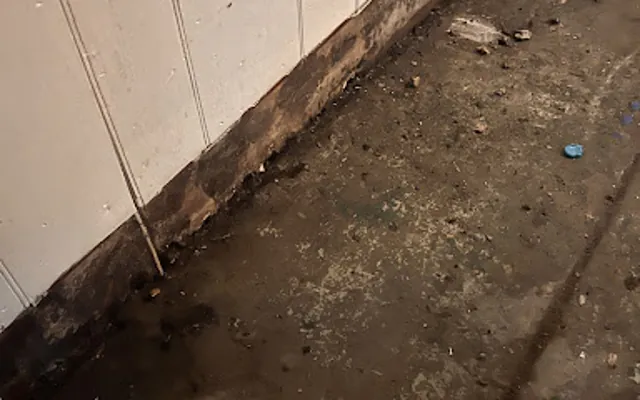
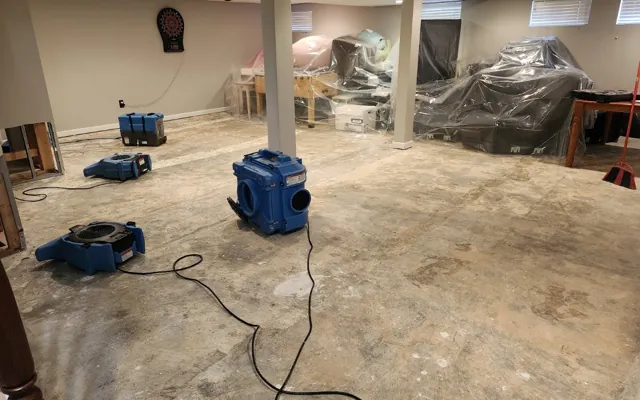
When a sewage backup hits a Media District, CA building, local crews respond in about an hour. They follow IICRC-standard methods to extract contaminated water, remove soiled materials, and restore the area to a dry, safe standard.

Technicians arrive in protective gear to contain the spill zone and halt water use. They then use dedicated pumps to extract all standing Category 3 water from flooring and any affected low points in the building.
Carpet, padding, and drywall that absorbed sewage are cut out and bagged for disposal. This step is critical in Media District multifamily units to prevent contamination from spreading to adjacent spaces through shared walls or floors.
The team applies antimicrobial treatment to all affected structural surfaces. Industrial air movers and dehumidifiers then run until moisture meters confirm the area is dry, a process carefully documented for property managers and insurers.

Sewage backup cleanup in Media District generally runs from about $1,500 to $6,000, depending on how far the contaminated water spread, how much flooring and drywall has to be removed, and whether the backup affected one unit or traveled between floors in a multifamily building. A contained bathroom backup sits on the low end, while a backup that reaches multiple rooms or a shared building stack sits on the high end. Sewage cleanup is typically covered under a homeowner or renters policy when tied to a sudden line failure, and the scope of contaminated material removed is documented in detail for the insurance carrier.
Sewage backups in the Media District's studio and multifamily buildings often start with aging supply lines or flat roof drain issues. When contaminated water escapes, it can spread quickly between commercial and residential units, requiring immediate containment to protect the structure and neighboring spaces from damage. In the Media District, CA, older plumbing behind commercial and residential walls and large flat-roof drainage systems on studio buildings are common sources. These systems can fail, leading to sudden sewage backups that require rapid professional cleanup. From Media District, crews also cover nearby Magnolia Park, Rancho District, Toluca Lake, Burbank Hills, North Hollywood, Glendale. See every neighborhood and town on the full service area page.
See all areas servedEvery loss is photographed, measured, and logged from the first visit, so the paperwork holds up with the insurance carrier.
Technicians follow recognized IICRC drying standards and prove it with daily moisture readings on Media District homes, not guesswork.
Emergency dispatch any hour of the day or night, with a real crew on the way across the San Fernando Valley, not a callback in the morning.
A real crew dispatched any hour, not a callback in the morning.
Trained technicians following recognized IICRC drying standards.
Truck-mounted, portable, and submersible for any size loss.
The loss is documented and billed to the carrier directly.
Most homeowner and renters policies cover sudden line failures. Local crews document the full scope of contaminated material removed, which is crucial for the insurance claim. Coverage details depend on the specific policy and the cause of the backup.
For a contained backup in a Media District office or studio building, extraction and removal may take a day. Drying typically adds 2 to 4 days. Larger spills affecting multiple floors or units will require a longer timeline to ensure complete remediation.
Crews are on call 24 hours a day and can be on the way to Media District within the hour.
Call (747) 977-8570