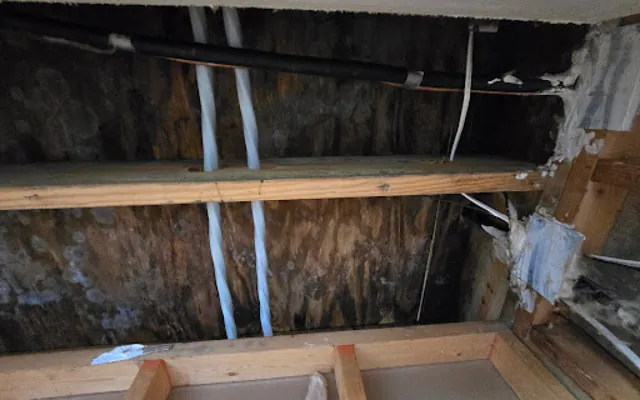
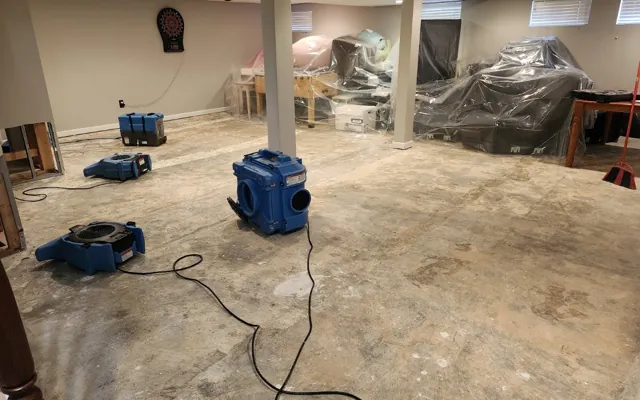
A Rancho District, CA attic leak needs fast local response to save insulation and plaster. The crew follows IICRC-standard methods, drying these older bungalows with minimal disruption to original finishes.

Technicians first locate the exact water entry point, which in Rancho District is often a roof leak or a supply line leak. They contain the area to prevent further damage to the original plaster and hardwood floors below.
Saturated insulation is promptly removed. In these older homes, wet insulation holds moisture against the roof framing and ceiling drywall, accelerating damage and preventing proper drying of the historic structure.
The crew maps moisture in rafters and the ceiling cavity with meters. Then, strategic air movers and dehumidifiers dry the space to a standard, preparing it for a roofer or plumber to fix the source.

Attic water damage caught with a contained wet spot in insulation and no ceiling sagging typically runs from about $600 to $1,800 for insulation removal, drying, and minor ceiling repair. Damage that reached framing across a larger section, or caused a ceiling to sag or need drywall replacement in more than one room, runs closer to $2,500 to $7,000. New insulation is typically a separate line item once drying is verified. Sudden water intrusion is commonly covered by homeowners insurance, with moisture documentation supporting the claim.
In the Rancho District, CA, the 1920s-through-1940s bungalows with original plaster and hardwood are vulnerable when roof leaks or plumbing failures send water into the attic. This issue is common after Burbank's long dry summers crack old roof sealants, or when aging galvanized pipes on slab-on-grade lots develop pinhole leaks. Rancho District calls often stem from two local factors: aging galvanized supply lines in slab foundations, and roof sealants that fail after Burbank's long, dry summers. Both can channel water into the attic, threatening the insulation and the original plaster ceilings below. From Rancho District, crews also cover nearby Burbank Hills, Magnolia Park, Media District, Toluca Lake, North Hollywood, Glendale. See every neighborhood and town on the full service area page.
See all areas servedEvery loss is photographed, measured, and logged from the first visit, so the paperwork holds up with the insurance carrier.
Technicians follow recognized IICRC drying standards and prove it with daily moisture readings on Rancho District homes, not guesswork.
Emergency dispatch any hour of the day or night, with a real crew on the way across the San Fernando Valley, not a callback in the morning.
A real crew dispatched any hour, not a callback in the morning.
Trained technicians following recognized IICRC drying standards.
Truck-mounted, portable, and submersible for any size loss.
The loss is documented and billed to the carrier directly.
Not always. While roof leaks are common after dry summers, local crews in Rancho District also frequently find the source is an aging galvanized supply line under the slab. They inspect thoroughly to identify the true entry point before any drying begins.
Saturated insulation is removed because it loses its R-value and traps moisture against the wood framing. Once drying is verified to IICRC standards, homeowners can arrange for new insulation as a separate project, often with a recommended contractor.
Crews are on call 24 hours a day and can be on the way to Rancho District within the hour.
Call (747) 977-8570